
Vietnam 越南
FACTS ABOUT VIETNAM
- Capital: Hanoi
- Land Area: 331,000 sq. km (about the same size as Malaysia)
- Population: 86.9 million (2010)
- Currency: Dong
- Exchange Rate: US$1.00 = 20,000 (April 2011 )
- Major Industries: agriculture, forestry, fishery, industrial construction.
- Major Export: crude oil, coal, chromium, tin, cements, woolen carpet, jute carpet, rice, cinnamon, marine products.
- Major Import: motors, petroleum products, diesel oil, fertilize
Vietnamese people lived in war since early history: the country was colonized by foreign powers for nearly a century. In 1954 with the aid of China, Vietnam defeated France resulting in the formation of two countries: North Vietnam and South Vietnam under the Geneva Convention. However peace did not come through for the people of both countries; instead civil war started. Super powers intervened and the US got involve in the so-called Vietnam War in the 1960s until its pull-out in 1975 when the two countries were re-unified.
Formerly known as Saigon with a population of 5 million (1993). Renamed after the Americans left at the end of the Vietnam War in 1975. Once called Paris of the East because of its French colonial architecture and sidewalk cafes. It is the biggest city in Vietnam; it is also the biggest port in Vietnam, only about 70 km from the South China Sea. Vietnam's economic reforms are most evident in Ho Chi Minh City.
What to see in this city?
- The Reunification Palace, formerly the Presidential Palace with a striking photograph showing the Vietnamese army tank slammed through the Presidential Palace's gates in April 1975, which symbolically marked the South Vietnamese defeat in the War
- The War Crimes Museum with photographs and exhibits on the Vietnam War and you must be psychologically prepared on the sight of photos of babies hideously deformed, the consequences of exposure to Agent Orange
- The Historical Museum with archaeological artifacts and a bronze Buddha that dates from the 5th century
- Cu Chi Village, also known as the Steel City - a remarkable team works that saw the fall of the Americans in the Vietnam War. The village is located 60 km north-west of Ho Chi Minh City. It is the nearest Vietcong military base close to the American air-base in Ho Chi Minh City. During the day the women folks did their normal farming and daily chores including collecting intelligent information; however when night fell they went underground, physically, to assist the Vietcong sewing uniforms and making slippers (shoes) and preparing food.
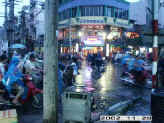
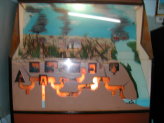
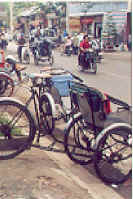
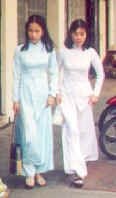
From Left to Right
- City by Night: Considered as the "Gemstone in the Far East", Ho Chi Minh City named after President Ho Chi Minh houses a prosperous and modern life with numerous skyscrapers. Not ancient like Hanoi nor romantic as Nha Trang, this city is advancing in the cause of national industrialization and modernization.
- Cu Ci Tunnel: The Cu Chi Tunnels built during Vietnam's war for independence from the French. The tunnels were greatly enlarged during the war with the U.S. The tunnels, 200 km in length, was a unique and complex, web-like underground engineering works. There are 3 levels, 2-10 meters below ground level: there are places for meeting, cooking, sleeping, sewing, injury treatment, making weapons; emergency exit through Saigon River and traps.
- Cyclo: They banned these cyclos in 2001 as a remnant of the war-torn past when the country strove to lure foreign investment They even banned a film about them. But two years later the ban was lifted and the cyclos are back on the streets of Vietnam, notably in Ho Chi Minh City, Danang and Hanoi.
- Traditional Costume: Pretty Vietnamese girls wearing the Vietnamese traditional costume.
| HANOI Hanoi is the capital of Vietnam. The city, founded in year 1010, sits on the banks of the Red River and is about 70 km from the Gulf of Tonkin. It is a city of lakes and parks with trees lining along the street and said to be Vietnam's most beautiful city. There are many French colonial building reminding the locals and tourists alike that the country was once ruled by the French. Vietnam was ruled by France for 96 years, from 1858 until their defeat in May 1954 in the famous Battle of Dien Bien Phu. The town outlying areas were bombed heavily during the Vietnam War. Tourism infrastructure in Hanoi is still well below those offered by the sister city, Ho Chi Minh City. Notwithstanding this short coming Hanoi has a lot of interesting things to see. There are two very unique hisorical areas: the ancient city near Hoan Kiem Lake and the French-styled houses that were built by the French during their reign. Besides the many pagodas and temples in the city there are many ancient streets blooming with the same lotus flowers that have been existed here for centuries. |
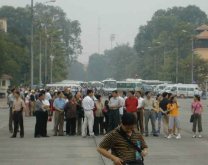
- (Left) The Crowd: Hundred of tourists were disappointed when they were told that the Ho Chi Minh Mausoleum was closed for a month for annual maintenance, usually from late October to early November.
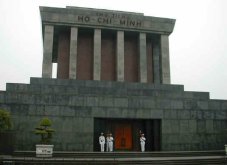
- (Centre) Ho Chi Minh Mausoleum: Ho Chi Minh, who led North Vietnamese fight against the US died in 1969; he did not live to witness the defeat of the US in 1975; this mausoleum where his body is preserved, is built in his honour.
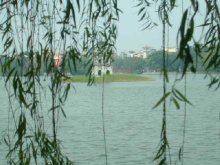
- (Right) Hoan Kiem Lake: This is Hoan Kiem Lake, located in Hanoi commercial centre; there is a walkway along the lake perimeter and strolling along this shady walkway is most relaxing, day or night with the lake breeze cooling you along.
Relationship between Vietnam and China, sometimes amicable, sometimes antagonistic, have greatly impacted upon the fortunes of ethnic Chinese residents in Vietnam. An important issue in the experience of the Chinese in Vietnam has always been the depth and degree of the two countries' interaction. In the late 1970s all Chinese newspapers had to close down, as did all Chinese schools. At about the same time there were tides of 'boat people' left Vietnam. In 1986 Vietnam decided to unfetter the economy and move towards a more open society. Overseas Vietnamese, principally ethnic Chinese, have returned with some capital and know-how. Local Chinese are considered as an asset by the government, which hopes their oversea relatives and connections will help to bring in foreign investment. There are reports of revival of Chinese organizations and the re-opening of Chinese language schools. State-run television also aired Chinese language session on conversation for the tourism sector. There are signs of life in Chinese cultural and leisure activities too. |
|
| Photo from left:
|
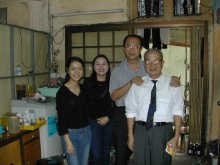 | 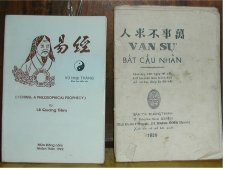 |
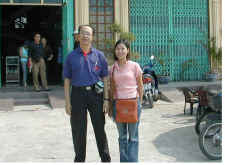
First Photo: Mr Chen ( right) is the Chairmanof a Yi Jing society in Hanoi. Though an ethnic Chinese he can not speak Mandarin, so are his grand-daughter (left) and his daughter. | Second Photo: Yi Jing written in Vietnamese language
|
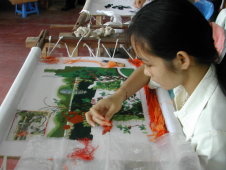
| Dai Nghia Humanitarian Centre for the Yellow Agent victims was set up on 10 December 2000 to offer assistance and training for the victims affected by the Yellow Agent to stabilize their lives and integrate into society; the Yellow Agent is the left over effect as the result of chemical war used by the Americans during the Vietnam War.The Centre is located along the route to Halong Bay City, about an hour drive from Hanoi. The Centre sells handicraft made by the victims, a program aim at training the victims to be self-supportive. It was documented that during the Vietnam War, US used up to 100 million litre of Yellow Agent which contained cancerous chemical. Few million US army personnel were suspected to carry Yellow Agent side effect and some Vietnamese possess 200 times more than the acceptable level of such chemical. | |
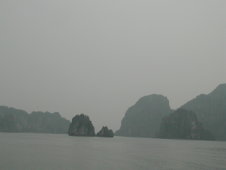
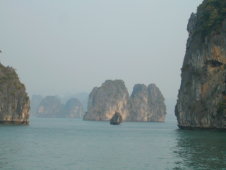
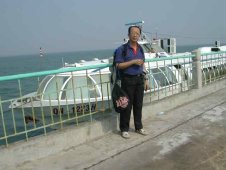
HALONG BAY CITY The next stop-over was Halong Bay City, an up-coming holiday resort located in the north east of Hanoi. From Halong Bay City ferry terminal the EXPEDITION took the ferry that cruised among the many islands. Passengers in the ferry can witness the most spectacular sea landscape in the world. Halong Bay has 1960 islands within an area of 1550 square km; the islands rise from the sea waters resembles very much the famous mountain of Guilin in China. The ferry ride takes about 3 hours before reaching the jetty. Passengers from the ferry have to take a 20 minutes bus ride before arriving at Mong Cai, a border town with China. The bus stopped at the ferry operation office at Mong Cai. After disembarking from the bus we took a leisure walk from the office to the border post. | |
|
The bus journey from the jetty to Mong Cai takes about 20 minutes. The bus goes through the country side. Paddy field is a common sight in most part of the Vietnam country side. Rice cultivation, past and present, is one of the major economic activities of Vietnam, stretching from this northern part and reaches 1,800 km towards the south, ending at the estuary of the Mekong River. |
|
|
FROM MONG CAI TO DONG XING, CHINA
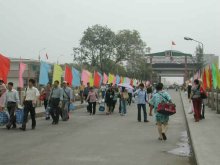
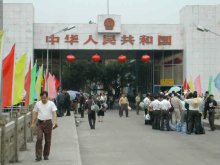
After immigration clearance at the Vietnam side we walked towards the China immigration building about 200 meter on the opposite side. The Vietnam and China border is separated by a river here. The two immigration posts are linked by a concrete bridge. From the immigration building on the China side we took a 10 minutes tricycle ride, passing Dong Xing (Guangxi Province of China) town centre to arrive at the the main bus station.
|
|
Our objectives:
- to enhance networking through Penang-Hainan
- to encourage younger generation to know Asean
- to promote Asean + China backpacking tour
- to share infomation and data related to Hainanese
我们的宗旨:
1. 通过槟城-海南平台提升联系
2. 鼓励年轻一代多认识东盟
3. 促进东盟 + 中国自助旅游
4. 分享有关海南人讯息及资料

海南岛沙滩 Hainan beach

槟城海滩日落 Penang Sunset
Sponsors 赞助单位
ODE MANAGEMENT SERVICES SDN BHD (105806-W)
a member of 
Management Consultants
槟榔屿与海南岛
有关槟榔屿
有关海南岛
Travel Quick Links 旅游快速链接
Airlines 航空:
Air Asia 亚航
China Airlines 中华航空
China Southern 南方航空
Firefly
Hongkong Express
Hainan Airlines
海南航空(中国国内)
Jetstar 捷星
Malindo 马印航空
Scoot 酷航
Thaiairways 泰航
Debit Card 消费卡:
Bank of China 中国银行
Directory
Map 地图:
Google 谷歌
Hainan 海南
Sogou 搜狗
Taipei 台北(台湾)
Mobile Phone 移动电话:
China Mobile 中国移动
Singtel Mobile 新加坡移动
Taiwan Mobile 台湾大哥大
Railway 铁路:
China 铁路
Malayan 马来亚
Thailand 泰国
Search Engine 搜索:
Baidu 百度
Google 谷歌
Google Translate 谷歌翻译
Sohu 搜孤
Collaborating Companies 合作伙伴
Caritech Sdn Bhd
Web Design Penang
Details .... Contact us
详情 .... 联系我们